

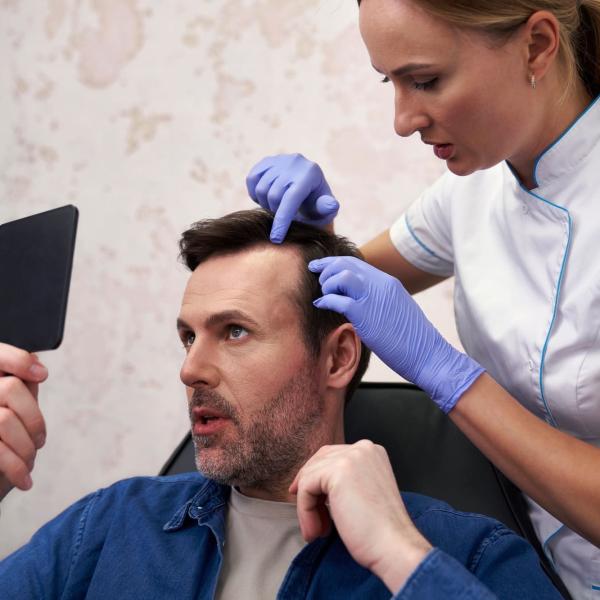
Your questions answered
We understand that you may have many questions about hair loss, hair restoration procedures, and what to expect throughout your journey. This comprehensive FAQ section is designed to provide you with clear, detailed answers to the most common inquiries we receive. We’ve organized the FAQs into categories to make it easy for you to find the information most relevant to your needs. If you don’t find the answer you’re looking for, please don’t hesitate to contact us directly. Our team is here to provide personalized support and guidance.
Hair transplant surgery involves transplanting your own hair from a donor area—typically the back of your head—to areas experiencing hair loss. Your suitability depends on several factors, including:
The quality and quantity of your donor hair
Your age
The progression of your hair loss
A consultation will determine whether you’re an ideal candidate for the procedure.
We would like you to come in the next day for us to redo the dressings and wash your donor area for you. A 1 week follow up visit is also included in your package to determine if grafts are firmly in place and if there is any further treatment needed. If you require any advice or would like to see the doctor in person for a follow up, you are more than welcome to book an appointment at no extra cost. All patients must come in for a free assessment at 6 months and at 1 year months for hair diameter and hair density measurements to determine if the grafts are stable and if further medications are required. A Comparison is done with your preop photos to see
Many patients prefer to wear a loose-fitting hat for the first few days. Avoid tight hats within the first 72 hours, as the grafts need time to settle.
By Day 7-10, any small scabs will naturally fall off, and your transplant will no longer be noticeable. If outdoors, covering your head during the first few weeks is advised to protect against sun exposure.
Our results look completely natural, and most people won’t notice you’ve had a procedure, they usually remark that your hair looks new and youthful.
In rare cases, tiny white dots may appear in the donor area, but they are hardly visible, especially with a short haircut (such as a “number 1” or “number 2” buzz cut over the donor site).
7-10 Days – Scabs will fall off, leaving no visible signs of the procedure.
Up to 8 Weeks – The donor area may still feel slightly sensitive.
Numbness & Tingling – These sensations are normal and generally subside within a few weeks.
At THTC, we follow the practises of top tier clinics and improve on them with our three-step approach to hair restoration:
1️⃣ Regain – Prevent further hair loss using oral or topical treatments.
2️⃣ Restore – Transplant hair into balding areas for a natural look.
3️⃣ Retain – Maintain your restored hair and prevent future loss.
Unlike other clinics that rush into surgery without considering long-term stability, we ensure your hair remains full and healthy for years to come.
When a patient first consults with us for their hair loss problems, our first aim is to arrest or halt the hair loss that the patient is experiencing (using oral or topical medications). With the threat of further hair loss being removed, we can thereafter transplant hair into the bald areas that are already present to restore hair to these areas. The first two steps restore your hairline to its youthfull pre “hair loss” look. The third step in our process is to prevent any further loss of hair in the future by continuing hair loss medications (topical and oral) as required, thereby maintaining your gains lifelong.
We do not rush to do a procedure, if it means that within a few years, you will be back for more surgery to regain the parts of your hairline that you continue to lose. We consider it predatory, to operate more than once on a patient, and prefer to regain, restore and retain.
The short answer is NO: not with THTC. Transplanted hair is permanent and will not fall out (in the absence of serious medical conditions). The reason for this, is that the hair is taken from an area of the scalp that are insensitive to loss due to the effects of hormones, so when it is transplanted it continues to grow. However, the hair surrounding the transplanted hair may still fall if you are not treating these hair follicles. The reasons for this usually include continuing balding that would have happened anyway, stress or a medical problem causing hair loss. Continuing balding can be prevented by medication, this is the “Regain and Retain” parts of our philosophy .
Everything will be explained to you on booking. Certain medications may need to be adjusted and we also recommend stopping smoking and alcohol. We do not recommend you drive after the procedure due to the sedation drugs, so you may need to organise someone to pick you up or we can also organise transport for you. You may eat a light meal before your surgery, unless you have specifically requested a conscious sedation. Line up some entertainment at home as it is not recommended that you go out the night of your surgery.
its important to note that hair with our propriety processes and aftercare treatments, hardly any of our patients experience post op hair shedding (the so called “ugly duckling stage’). However if you do experience shedding, hair will shed 2 to 3 weeks after the surgery and will start regrowing 2 to 3 months after the surgery.
- 3–4 months:Early signs of new hair growth.
- 6 months:Around 50% regrowth.
- 12 months:Approximately 90% regrowth.
- 18 months:Final results fully visible.
Hair transplant failures are a common issue among patients who have undergone procedures at certain other clinics, even those that heavily market themselves as industry leaders—only to later seek corrective surgery at reputable centers like THTC.
Before undergoing a procedure, it is essential to research who actually will perform your op and verify a provider’s credentials. A hospital-based service like THTC is mandated to follow strict medical standards and protocols, ensuring that only thoroughly vetted and experienced surgeons perform your entire procedure—an industry best practice for any hospital setting.
Common Issues with Certain clinics
- Procedures are not performed by a qualified surgeon or only part of the process is done by a doctor.
- Technicians or nurses performing the majority of the procedure instead of experienced surgeons.
- Misleading marketing, where funds are directed toward celebrity endorsements, TikTok Stars or various other marketing modalities rather than expert care and high-quality equipment.
- Use of reusable instruments and consumables to save costs, which compromise final results.
Corrective Transplants often require deplantation and reimplantation of poorly placed grafts. If you’ve had a suboptimal transplant elsewhere, we can restore your hair with precision.
Most patients resume their routine by Day 2, as discomfort is minimal and healing is quick.
If discretion isn’t a concern, you’ll be able to return to most activities in two days.
However, if you prefer complete discretion and privacy, we recommend taking a week off to allow scabs to fall off naturally—by then, you’ll simply look like you shaved your head.
If you smoke, it’s crucial to stop as early as possible before and after your procedure. Nicotine constricts blood vessels, reduces oxygen supply to the scalp, and can negatively impact healing, increasing the risk of scarring and infection. Since nicotine lingers in your system, we recommend quitting at least a week before surgery—though longer is always better.
Avoid alcohol for at least three days before your procedure, as it may interfere with sedation and impact your body’s response to the surgery.
Certain medications should be paused or adjusted before your transplant:
- Blood thinners (e.g., Warfarin, Clavix, Ecotrin) should be stopped at least a week before, but only after consulting your doctor to ensure this is safe.
- Beta blockers (e.g., Propranolol) may need adjustments, as they can interfere with sedation—our surgeon will advise in advance.
- Vitamin B and E supplements should be stopped a week before surgery.
- NSAIDs (eg. Aspirin, Brufen) should also be discontinued a week prior to avoid excessive bleeding.
- We’ll go over all details at the time of booking, including any necessary medication adjustments.
- Smoking and alcohol should be minimized to optimize healing.
- Arrange transportation, as you won’t be able to drive after the procedure due to sedation. We can also assist with transport in the form of an UBER black ride home if needed.
- Eat a light meal before surgery unless you’ve opted for conscious sedation.
- Plan for a relaxed evening—line up some entertainment at home, as going out the night of your procedure isn’t recommended.
Start the day with a light breakfast but with no caffeine, try orange or pomegranate juice instead. Take a nice shower, wash your hair with your usual shampoo (no conditioner or styling products), and put on comfy clothes—a button-up or zip-up shirt or top is best Most importantly, take one last look in the mirror and say goodbye to the old you!
Once you arrive, we’ll walk you through the process again, go over your medical history, and answer any last-minute questions. Next, it’s time to design your new hairline—we’ll make sure you and the doctor are on the same page for the perfect hairline reconstruction.
To keep you relaxed, we’ll give you oral medication that kicks in within 20 minutes. While that settles, we’ll snap some “before” pics for your journey, then shave and wash your head. A numbing cream goes on first, followed by our comfort-in injector system, which makes the deeper anaesthesia process almost pain-free. After that, your job is simple—relax, nap, or stream your favourite show while we work our magic!
Most patients opt for light oral sedation, making it easy to sleep through the process. Prefer to stay awake? No problem—you can stream movies, listen to music, or chat with the team. If you want full sedation with an anaesthetist, we can arrange that too—we will arrange this in advance!
Patients report anything from zero pain to mild discomfort—way less than getting a tattoo. Since the area is fully numbed with anaesthetic cream, you usually won’t feel a thing. Light sedation is always available and And if you’re extra anxious, full heavy sedation is an option. We’ve got you covered!
Plan for about 8 hours, depending on how many grafts you need. But don’t worry—it’ll fly by, especially if you’re sleeping through most of it.
Following your procedure, your head will be bandaged, and we will assist you in getting dressed. If you have a partner or friend staying with you, they are welcome to join the post-op consultation.
You will receive a post-care package containing:
- Medications
- Special shampoo
- Printed post-op instructions (which will also be emailed to you for easy reference)
Since your scalp will be numb, take extra care to avoid bumping your head—especially when getting in and out of the car.
Once home, you may feel sleepy or hungry. We recommend having a light meal and getting some rest. You may shower, but avoid direct water pressure on your head.
Key post-op precautions:
- No exercise or strenuous activity
- Avoid sun exposure and polluted environments
- Do not touch your scalp to prevent infection
Unless you have allergies, you will be given:
- Pain medication(though most patients do not need it)
- Anti-inflammatory medicationto reduce swelling
- Antibioticsto prevent infection
- Sleep on your back with your head elevated, almost like a seated position. A lazy or recliner works best
- A travel pillow is recommended and is provided.
- Avoid putting pressure on the transplanted area—sleeping on the donor area is fine.
- Do not wash your hair on the day of your procedure.
- We encourage you to visit us the next day for your first wash, where we will also remove your old bandages and provide fresh ones.
- Avoid washing your hair on Days 2 and 3.
- Begin the prescribed washing routine from Day 4 onward for the next 10 days.
Minimal bleeding is expected, as the scalp is highly vascular. If you notice bleeding:
Apply gentle pressure using a clean gauze pad and call us. Persistent bleeding is extremely rare, please contact us immediately if you experience this.
There is no definitive research on this, but due to the risk of allergic reactions or chemical irritation, we recommend waiting at least 6 months before dyeing your hair.
60 days after the operation but avoid lakes and ocean water for 2 months.
Showering twice a day is fine, but do not touch the scalp for 5 days post operatively. Do not directly touch or apply pressure to the grafts in the first 2 weeks post surgery.
You can visit our clinic or conveniently order a refill through our website if you need more medication.
Yes, some redness or skin discoloration is expected, depending on your skin type. This typically resolves within 10 days.
Mild swelling and bruising are common and should subside within 3–4 days. To reduce swelling:
- Sleep upright at a 45-degree angle as instructed. Use the special pillow provided.
- Take the post-op medication provided to assist with swelling.
- For the first month, use only the specialized shampoos and products we provide.
- After two months, you may return to your regular shampoo, but for the best results, we recommend continuing with our haircare and hair loss products.
You may get a haircut one month after your procedure.
It is strongly recommended to begin oral or topical medication (or both) before your transplant and to continue long-term. This approach helps to:
- Prevent further hair loss
- Restore your hair to its original condition
- Maintain and protect your transplanted hair
Topical medications are generally very safe with minimal side effects.
Oral medications work systemically and have a list of potential side effects. However, in our clinical experience, we have not observed any significant side effects in our patients using our prescribed medications.
All injectable therapies we use are derived from your own blood, ensuring maximum safety and compatibility:
- PRP (Platelet-Rich Plasma) – Uses your platelets, which promote hair growth.
- GFC (Growth Factor Concentrate) – Extracts and refines specific growth factors from your blood to be reinjected.
- Exosome Therapy – Isolates and amplifies growth-promoting exosomes from your blood before reinjecting them into the scalp.
All these therapies have been clinically proven to be safe and effective for hair restoration.
We use:
- Prefilled microneedles and mesoguns to ensure precise and even distribution across the scalp.
- Pre-marked zones on your scalp to preferentially target areas of greater hair loss